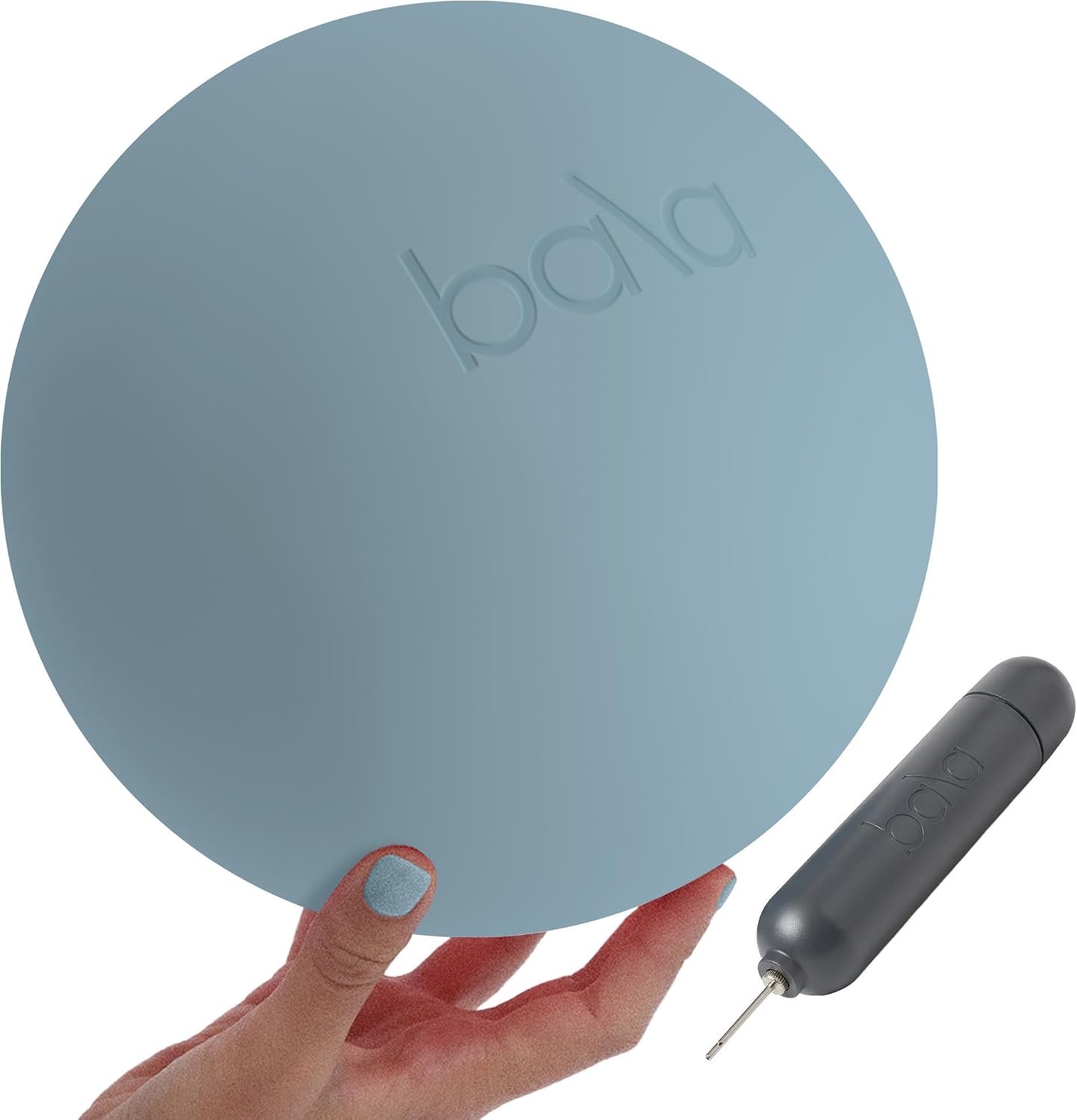
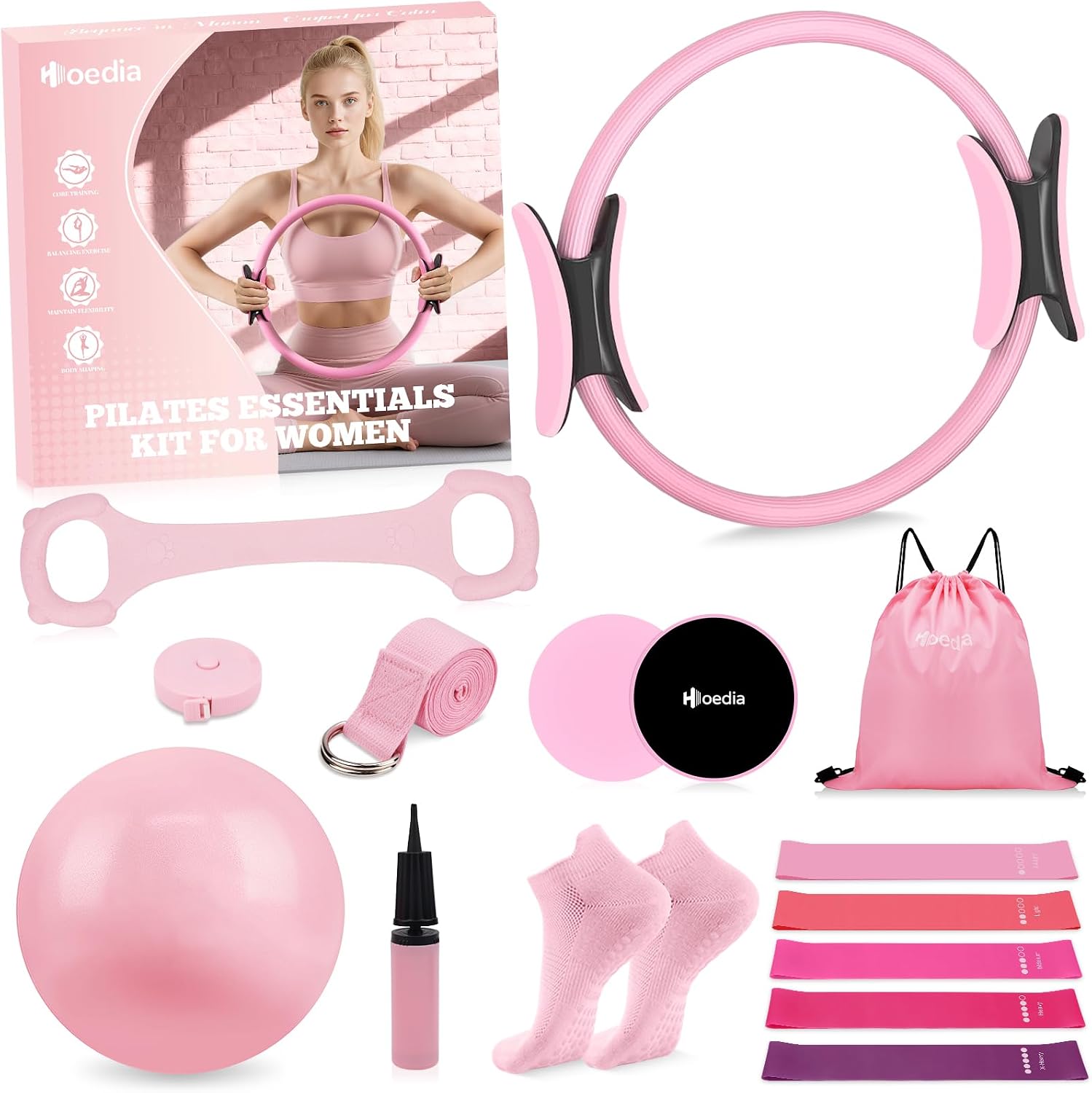
The mini ball is the most useful five dollars in Pilates and the piece of kit people most often buy in the wrong size or use fully inflated when it should be soft.
Nine inch is the default
A 9-inch ball is the general-purpose size. It works for bridging, inner-thigh squeezes, abdominal support and as a prop under the sacrum. If you are buying one ball, buy this one.
A 7-inch ball is firmer under the lower back at the same inflation and suits smaller frames and more advanced work where you want a less stable surface.
The difference is real but not dramatic. Do not buy both to start with.
Inflation is the part people get wrong
A mini ball should not be hard. Inflate it to roughly three-quarters — it should compress noticeably under a hand and deform when you sit on it.
A fully inflated ball is unstable in the wrong way, uncomfortable under the spine, and prone to splitting at the seam. Under-inflating slightly costs you nothing.
Inflate, use it once, and expect to add or release a little. Most balls stretch slightly in the first week.
What it does in class
Between the knees during bridging, it gives the adductors something to work against and stops the knees splaying.
Under the sacrum, it changes the angle of the pelvis and adds a stability demand to abdominal work.
Behind the lower back against a wall, it supports a seated position and gives feedback about spinal position.
Under one hand or foot, it removes stability from a plank or a lunge, which is a very large increase in difficulty for a very small piece of equipment.
Care
Keep it away from direct sun and heat, which degrade the PVC. Wipe with a damp cloth rather than a solvent cleaner.
Store it partly deflated if it will not be used for a while — it lasts considerably longer.
Check the seam periodically. A ball with a visible seam split should be replaced, not patched.
Where it beats a large stability ball
Storage, portability and precision. A mini ball fits in a bag and does most of what people actually use a large ball for in a mat class.
A large ball is better for supported back extension and for people who want a chair alternative, and it is much harder to store.
Buying
Look for a stated diameter, a burst-resistant rating and an included pump or straw. Balls sold without any means of inflating them are a small but persistent annoyance.
See Mini Balls and Props.
All notes
Browse the full range in the shop, read the frequently asked questions, or contact us — Pilates of Kansas City, Overland Park, KS.